
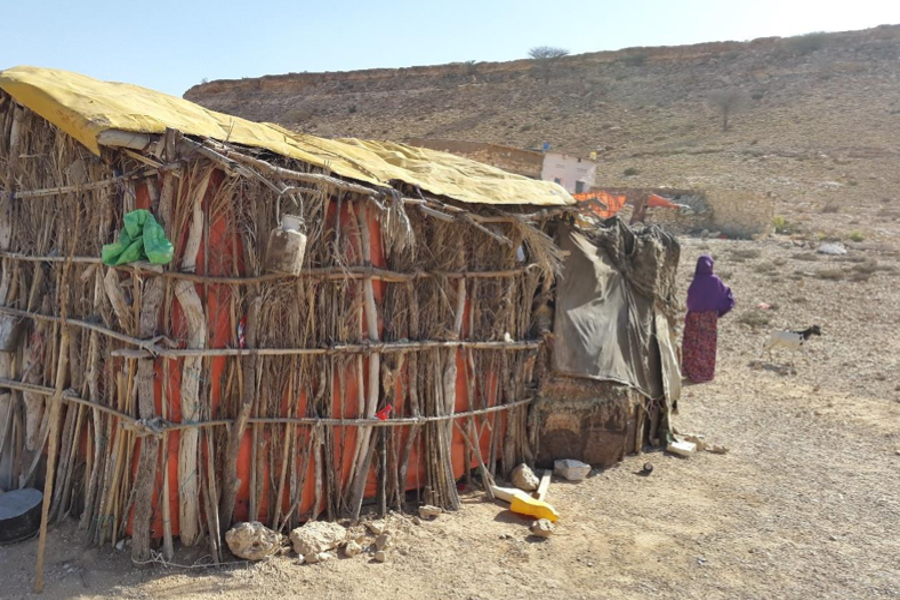
Bosaso, Somalia: A joint initial assessment conducted by SEDO and 14 other humanitarian agencies has revealed that an estimated 1,657 displaced households (approximately 9,940 persons) remain in critical need of shelter, food, clean water, and livelihood support following military operations in the Galgala hills between August 2010 and October 2014.
The assessment, carried out in collaboration with WFP, UNHCR, NRC, IOM, SCI, ASAL, HADO, ACDC, OTP, DRC, CARE, TASS, OCHA, local authorities, traditional leaders, and HADMA focal points in Sanaag region, was initiated in response to an appeal by the Puntland president, with special emphasis on acute water scarcity, shelter/non‑food items (NFI), food security, and livelihoods.


Displacement Worsened by Insecurity and Supply Restrictions
The Galgala military campaign, which began in August 2010 and continued periodically until October 2014, was launched by the government to regain control of the Galgala hills from Al Shabaab. During this period, approximately 1,950 households (11,700 persons) fled to locations including El‑Dahir, Awsane, El Lahelay, Af‑Urur, Bossaso, Kalabayr, Buraan, and Dhahar.
According to interviewed families and key informants, the primary drivers of displacement were insecurity and government‑imposed supply restrictions on food, medicine, and other essential items – measures intended to cut Al Shabaab’s supply lines but which severely affected civilian populations.
Largest Displacements Occurred in Four Waves
The largest population displacements took place in August 2010, June 2011, February 2012, and October 2014. Villages experiencing significant outflows included Galgala, Maraja, Balidacar, Hamur, Hadhweyn, Bali‑khaddar, and Madarshoon. Most displaced families have since constructed makeshift shelters in El‑Dahir, El Lahelay, Awsane, Af‑Urur, Buraan, Bossaso, Dhahar, and other nearby towns and villages.
Of the total displaced, 1,657 households were settled in the assessed areas, comprising pastoralists, agro‑pastoralists, villagers, farmers, honey collectors, cow herders, and frankincense collectors. The breakdown includes:
- Buraan: 390 households
- El‑Dahir: 489 households
- El Lahelay and Awsane: 278 households
- Dhahar: 500 households
Some Areas Remain Inaccessible
The assessment team noted that certain locations, including Af‑Urur and Kalabayr in the Al Madow mountains, remain inaccessible, making it impossible to verify the number of households living there.
No Humanitarian Assistance Reported; Livelihoods Collapsed
The initial investigation – described as not exhaustive but indicative of a punitive situation – found that neither new nor old arrivals have received any humanitarian assistance in any of the visited villages.
Most displaced families have lost all income sources. They lack adequate shelter, health services, nutrition, education, and clean water. Their current survival strategies include:
- Borrowing (reported in several locations)
- Selling or relying on livestock (notably in Buraan)
- Gifts from relatives (in Dhahar and Bossaso)
Urgent Needs Identified
Based on the joint initial assessment, SEDO and partner agencies are calling for immediate humanitarian intervention, particularly in:
- Emergency shelter and non‑food items
- Food assistance
- Access to clean water and sanitation
- Basic health and nutrition services
- Livelihood restoration for pastoralist and farming communities
For more details, please read the full report here: