
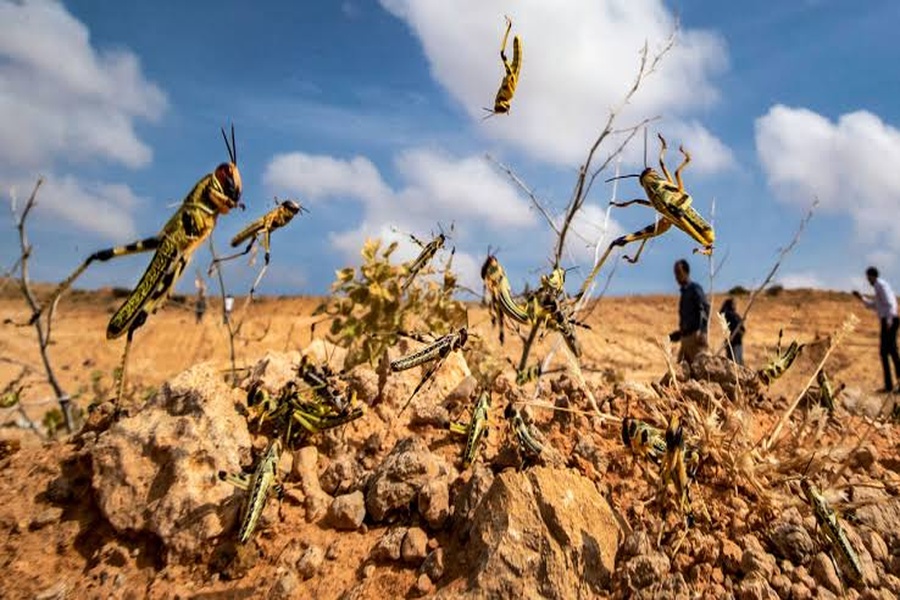
Sanaag Region, Somalia: In early 2020, desert locust swarms swept across Somalia the worst invasion the country had seen in a quarter of a century. For communities already reeling from food insecurity, drought, and climate extremes, it was a devastating blow. Crops were destroyed. Pastures vanished. Livestock weakened. Families who had little to begin with lost everything. Somalia was one of the hardest-hit countries in the region and the first to declare a state of emergency. In response, the Federal Government of Somalia, with support from donors and partners, launched multiple mitigation projects to control the spread of the pests, address immediate food needs, and protect livelihoods. SEDO Somalia stepped forward to contribute not with pesticides or aircraft, but with something equally vital: accurate data and direct support to the most vulnerable families.
Working closely with WFP and the Government of Somalia, SEDO registered 1,997 households affected by the locust invasion in Sanaag region. These families were identified through community consultations and careful data collection, ensuring that assistance reached those who needed it most. Each household received $60 USD per month for six months a simple but lifeline intervention that allowed families to buy food, pay for medicine, and keep their children in school during the crisis. While aerial spraying and ground control operations tackled the locusts themselves, SEDO focused on the human side of the response: making sure that communities devastated by the swarms could survive the immediate aftermath and begin to rebuild.
The project was short, just six months, but the impact has been lasting. For families who had watched their crops and pastures disappear under a blanket of locusts, the monthly cash transfers meant they did not have to choose between feeding their children and paying for water. They could buy food at local markets, which in turn supported local traders. And they could plan for the future, knowing that help had arrived when they needed it most. The locusts have since moved on, but the vulnerability remains. SEDO Somalia continues to work with communities in Sanaag and beyond, building resilience so that when the next crisis comes, as it surely will, families are better prepared to face it. Not as victims, but as survivors.