
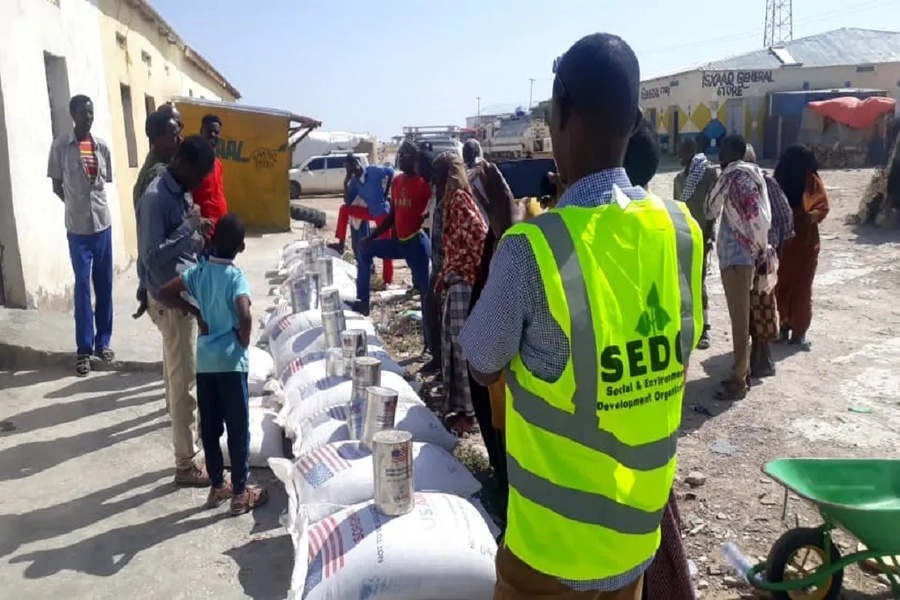
Sanaag, Somalia: Between 2018 and 2020, SEDO Somalia implemented four Food for Assets (FFA) projects across Ceerigaabo and Laasqorey districts in the east Golis livelihood zone, where communities rely almost entirely on pastoralism for their survival. But recurring droughts have left the land barren, water scarce, and families struggling to feed both their animals and themselves. Working with WFP, SEDO targeted the most food-insecure populations communities already receiving drought assistance to build lasting solutions. The projects reached 1,409 active participants, benefiting 8,454 household members, with women making up nearly 50% of both project participants and community decision-making committees.
The interventions focused on two critical activities: soil bunds and fodder production in Fiqifuliye and Xingalool, and rehabilitation of four water catchments in Sibaayo, Rad, and Yacfar. In total, 600 soil bunds (each 30m x 1m x 0.7m) were built to divert rainwater to pasture lands, preventing gully formation and allowing fodder to grow for more than 60,000 sheep and goats. Meanwhile, four water catchments each with an average capacity of 3,000 cubic meters were rehabilitated, providing free water access for over 100,000 animals and surrounding farms. Previously, families paid high prices for water at boreholes; now, they use those savings for health, education, and other needs. Throughout the three-month project cycles, 344.558 MT of food was distributed to participating households, ensuring they remained food secure during the lean seasons while building assets that would outlast the project itself.
The impact has been tangible and lasting. Healthier livestock mean more meat, more milk, and better nutrition for children and elders and higher market value when animals are sold. The projects also protected the environment, stopping gullies from forming and allowing pasture to regrow. To ensure sustainability, SEDO established Project Management Committees (PMCs) of seven members each more than 50% women who are now responsible for maintenance and coordination with local elders and administrations. All tools and non-food items were formally handed over to these committees, ensuring communities can carry out future rehabilitation on their own. The land is greener. The animals are fed. Families are eating. And the people of Sanaag region are now better equipped to face the next drought not as victims, but as stewards of their own future.


