
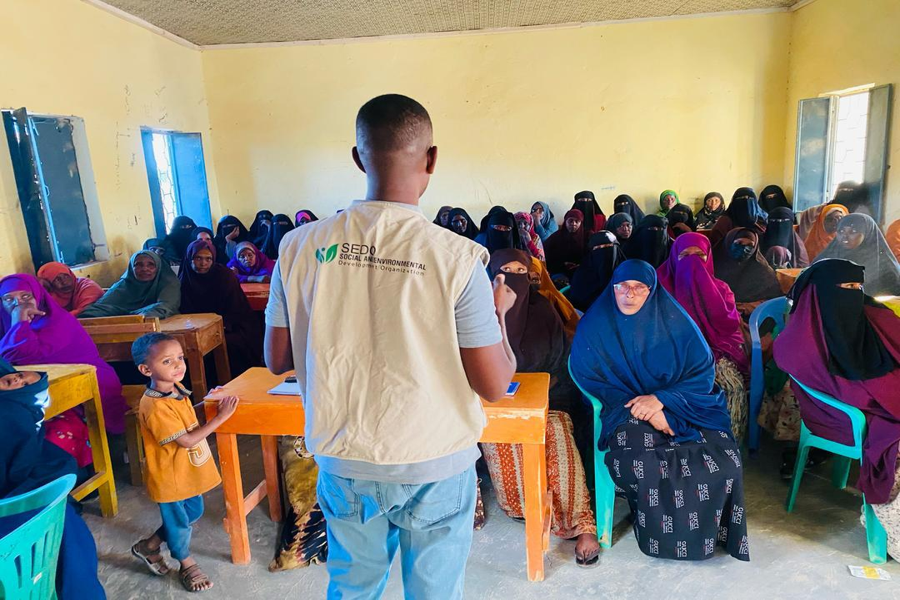
Ceelbuh, Sanaag: In humanitarian crises, men and women experience hardship differently. Women often face greater barriers to accessing aid, participate less in decision-making, and are more vulnerable to gender-based violence. Yet too often, relief projects are designed without considering these differences. SEDO Somalia is working to change that. The organization recently conducted a comprehensive training session in Ceelbuh, Sanaag region, bringing together representatives from local NGOs, government agencies, and community organizations to strengthen gender mainstreaming in relief and development programs. The goal was simple but essential; ensure that humanitarian response efforts reach everyone equally and address the specific needs of women, men, children, and vulnerable groups.
The training was highly interactive, with participants engaging in case studies, group discussions, and practical exercises. Facilitators covered critical topics including gender-based violence prevention, women’s participation in decision-making, and the role of cultural awareness in designing inclusive programs. Attendees explored real-world challenges and shared best practices for ensuring that aid distribution, resource allocation, and program design are fair and effective for all.
This training has equipped us with practical tools to ensure that our programs are more inclusive and responsive to the diverse needs of our communities.
One participant said
Speaking at the event, Mohamed Abdullahi, a SEDO Somalia representative, underscored the organization’s commitment to inclusive development.
Ensuring that gender considerations are embedded in relief projects is crucial for achieving sustainable impact. This training is part of our broader efforts to build the capacity of local actors in implementing gender-responsive initiatives.
he said
Participants left with renewed commitment and practical skills to apply in their work. SEDO Somalia plans to conduct similar training sessions in other regions, continuing its vital role in advocating for gender-sensitive humanitarian practices across the country.


